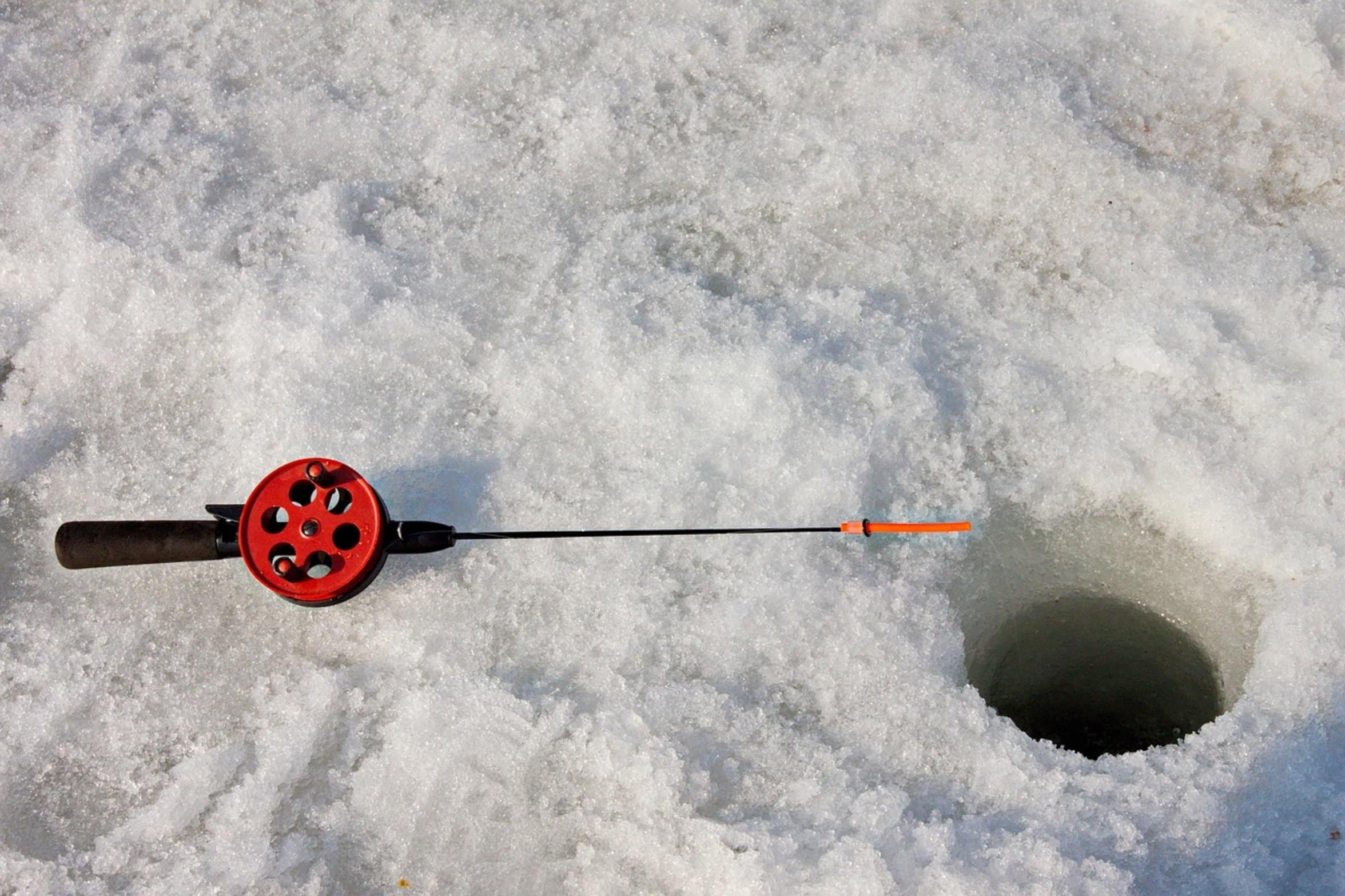
There’s a natural frustration to ice fishing. Drill the hole, throw the line in, wait. And you’re waiting for a lethargic, suspended fish to notice your lure in the dark water.
Fish aren’t chasing bait like they do in the summer. They’re saving energy. That changes how effectivness a lure is.
It can no longer be all about flash and speed. Something has to make them bite when they’re hardly moving. A lot of anglers believe small lures are always best in the cold.
It is a half truth. Yes, you need small lures when they get picky, but you also need something with some flash and vibration to locate them initially. You don’t want to simply present a bait.
You want to make a disturbance that comes over the top of them. Loud enough to be seen, but slow enough to be ignored as a lethargic predator until it’s right on your nose. The key is learning about the physical properties of light and sound transmission through varying temperature and water densities.
Denser water = cold water. Sound travel further. Light penetration varies.
This all has to do with how you use your lure. It’s got to be a sonar beacon. It has to have action that makes it stand out as something different.
Get that equation correct and you no longer fish against the conditions…you begin to fish with the conditions. The ice stops being an obstacle and transforms into a window into a very particular behavior.
Best Lures For Catching Perch Through Ice
Understanding Ice Fishing Physics
No surprise; jigging spoons are ice fishing’s workhorse.
Jigging Spoons for Vertical Search
They is versatile, effective, and simple. But a good spoon design such as the VMC Tungsten Jigging Spoon comes through the water column cutting on authorities. Its density is incredible for its size, thanks to the tungsten core.
It feel heavy in your hand and drops fast. You can feel that bottom. And that is important.
That vibration alerts perch to your presence, especially when you bounce it off lake floor. A spoon moves in an odd way. As it’s falling, it tumbles and flutters.
That imitates a confused insect or a dying baitfish. Perch are opportunistic feeders. If they see something that looks vulnerable, they’ll take a whack at it.
There’s no need for constant twitching of your rod. Just a lift and drop is often all that’s required. Allow the spoon to do the work.
Because it’s dense, when you lift it, it will quickly regain its position. This results in a vertical search pattern which covers more water then a horizontal jig does.
A variation would be blade baits.
Blade Baits for Lateral Line Attraction
They use vibration and spin instead of fluttering. Take the Fox Rage Flasher for instance. It’s just a weighted head with a blade at the end.
Raising and lowering your rod tip causes the blade to spin. That result in a pulsing vibration. That vibration is sometimes better than a visual flash, especially in low light or when the water is stained.
Perch don’t see, they feel pressure and movement from their lateral lines. That spinning blade is like a beacon. It is a beacon that attracts fish from afar.
And then when they get close, there’s either a little jig tied beneath it or a trailer hook to offer up the target. The two-part system provides separation between the bait and the attractant. You can set depth of the blade independent of the hook.
So you can maintain the blade in the top portion of the water column while keeping the bait down closer to bottom structure. That’s invaluable when the fish are spread out vertically.
Small jigs is your best precision tool.
Precision Small Jigs for Sluggish Fish
If perch are super sluggish, a really little one such as the Rapala X-Rap Ice can be too good for them to resist. It is light and subtle. Looks just like a larva or minnow.
Patience is key here. Let it float slowly back down. Don’t go fast because that’ll scare ’em away.
Use minimal action. Use just enough to give it life in the water. Many times these jigs will arrive naturaly colored.
Black is always good, as is olive and brown. These colors complement the natural forage in dirty water. For clear water you can go with some type of silver or gold finish that reflects well.
Size is important also. Go smaller if they’re small perch. That quarter-ounce jig may be just a little big.
Go down to an eight or even a sixteenth ounce. The lighter the jig, the slower it will fall. And this longer presentation time allows the fish more time to commit to the bite.
Not all soft plastics need to be fished in open water.
Soft Plastics and Scent Strategies
Grubs are a little tube bait that can be deadly underneath the ice. The Mepps Vibrax is a combination of a blade and soft plastic skirt.
So you get the profile of the soft plastic but the vibration of the blade bait. The skirt makes it look bigger than it is and gives it action. Sometimes this tricks larger perch into biting.
It’s a soft plastic that lasts, though. And it works with the jig. It flows with the water or your jig movement.
And you can put some scent on it too. A feeding response is triggered by scent in cold water where visual cues are weak. It is another way to convince them.
When they’re finicky, use it. But don’t count on it solely. There has to be something else drawing them into range, the movement and vibration.
Contrast is key, rather than color coordination to match the hatch.
Color Selection and Contrast
Red has long been a favorite. It pops in brown or green water.
In deeper water it looks like black, offering a good silhouette. Gold and silver work well in clear water as they flash back light. Black and chartreuse offer high contrast in ice or on snow.
Experiment with various colors. The clarity of the water can change by the day. Something that works in the morning might not hold up in the afternoon.
The last variable is retrieval speed.
Retrieval Speed and Hook Setting
Slow down. Way, way, way down.
Winter perch aren’t sprinters. They’re waiting. So make your retrieve look like something slowly moving along.
Lots of pauses. Hover for a second. Drop it again.
That’s often where they’ll hit it. It floats downward and then away from them. They commit to it.
Getting the hookset at that right time is critical. Feel it out and practice it. It’s a precise sport.
It takes patience. It’s a game of reads in the water. It adjust quickly to your surroundings.
There is no one magic lure. Just the correct lure for the day. Small jigs, spoons, and blade baits all play their part.
Use them well. Keep your line tight. Let the bait do the talking.
Don’t be afraid of the subtle bite. It’s there. You can feel it.
And then you hit ’em. They’re just waiting on you to get it right.