Swim jigs have long been associated with heavy cover by most bass fishermen. They envision themselves flipping the swim jig into some weed or dragging it across a brush pile. While that’s certainly a good way to use this lure, it limits it to one role.
In reality, swim jigs are very versatile lures that can be used effective in open water and for species we don’t tend to hear about much. For many years, people have lumped bluegill fishing into the casual category: guys sitting on a bank with a cane pole and red worm. While that technique can produce some fish, it’s not effective when you’re looking to target big bluegill or need to present something precise.
How To Catch More Bluegill With Swim Jigs
Why Swim Jigs Work for Bluegill
A swim jig completely changes the way you fish for panfish by turning a passive waiting game into an active hunt. Bluegill are visual hunters. They will focus on a little bit of flash and movement, which is why a swim jig fits their behavior so well.
With a traditional jig head, you can work the bait naturaly and then add a trailer or a skirt for that profile that causes a strike. It’s the best of both worlds: the natural presentation of live bait and the durability and visibility of an artificial. In either stained or clear water, this blend are lethal.
Swimming a jig around mimics a small baitfish or crawfish as it flees. By nature, bluegill is ambush predators. So they love to run down something vulnerable or erratic looking.
That’s what a swim jig enables you to do; twitch it, pause it, let it fall naturaly. All while controlling its action. When you’re punching your way into cover as a bass angler, weight and size definitely matter.
Choosing the Right Jig Weight
But that’s where you’ll run into some problems while fishing for panfish. To get the right fall rate on a jig, you want something lighter then a bulky jig head. One-eighth-ounce or even a quarter-ounce jig head will be best.
It let the jig fall slower, but it falls naturally too. This is typically when the bite come. Because the cooler water makes bluegill lazy predators, they don’t really want to put out much effort trying to chase down their food.
Something that falls slowly gives them a good look at it and stays in the strike zone for a long time. They see it as an easy meal. You can keep something in the strike zone longer than a heavier jig.
You also have a bit of control over your sensitivity. When you’re feeling around for bites and setting the hook, it’s a lot easier to feel a subtle tap if you aren’t battling against too much weight. When starting out as a panfish angler it can be confusing about which color jigs to use.
Selecting the Best Jig Colors
Most guys simply rely on bright neon pink or chartreuse because they see them in stores. These colors do catch fish but they aren’t necessarily the most effectve. In clear water natural colors tend to beat bright colors.
Smoke, white and browns is all solid starting points since these mimic the most popular forage such as minnows and crayfish. As water starts to stain, it’s important to get colorful. Natural colors filter through the water column and you want something that sticks out.
Chartreuse does this really well in low-visibility situations. It give off a silhouetted profile that bluegill can easily spot from afar. A general rule of thumb is to match the hatch.
What do the fish eats? Pick a jig that looks similar. Are there lots of crayfish?
Brown or reddish tones will work. Are minnows the main meal ticket? Silver or white is good.
Retrieve Techniques and Action
The big strength of a swim jig comes into play when it comes to reeling it back. With a worm on a dead stick, there is no presentation; instead, you’re actualy working it back. So you can work it fast and get a lot of water covered to find those active fish.
A good start would be to just keep reeling it in steady. Get it down to whatever depth you want it, then begin reeling steadily. Give the line small tugs every so often as if the bait is hesitating or slightly injured.
Those little stops can often trigger the bite. Bluegill will chase the bait, but they won’t attack until they think that bait is vulnerable for a split second. When that jig stop and flutters around a bit, they hit it.
This works especially well around structure. Throw up against logs under the water, docks, weed beds etc. Work the jig down the side of the structure. Where it meets open water is where the fish concentrate, and working it actively get their attention.
Recommended Rod and Line Setup
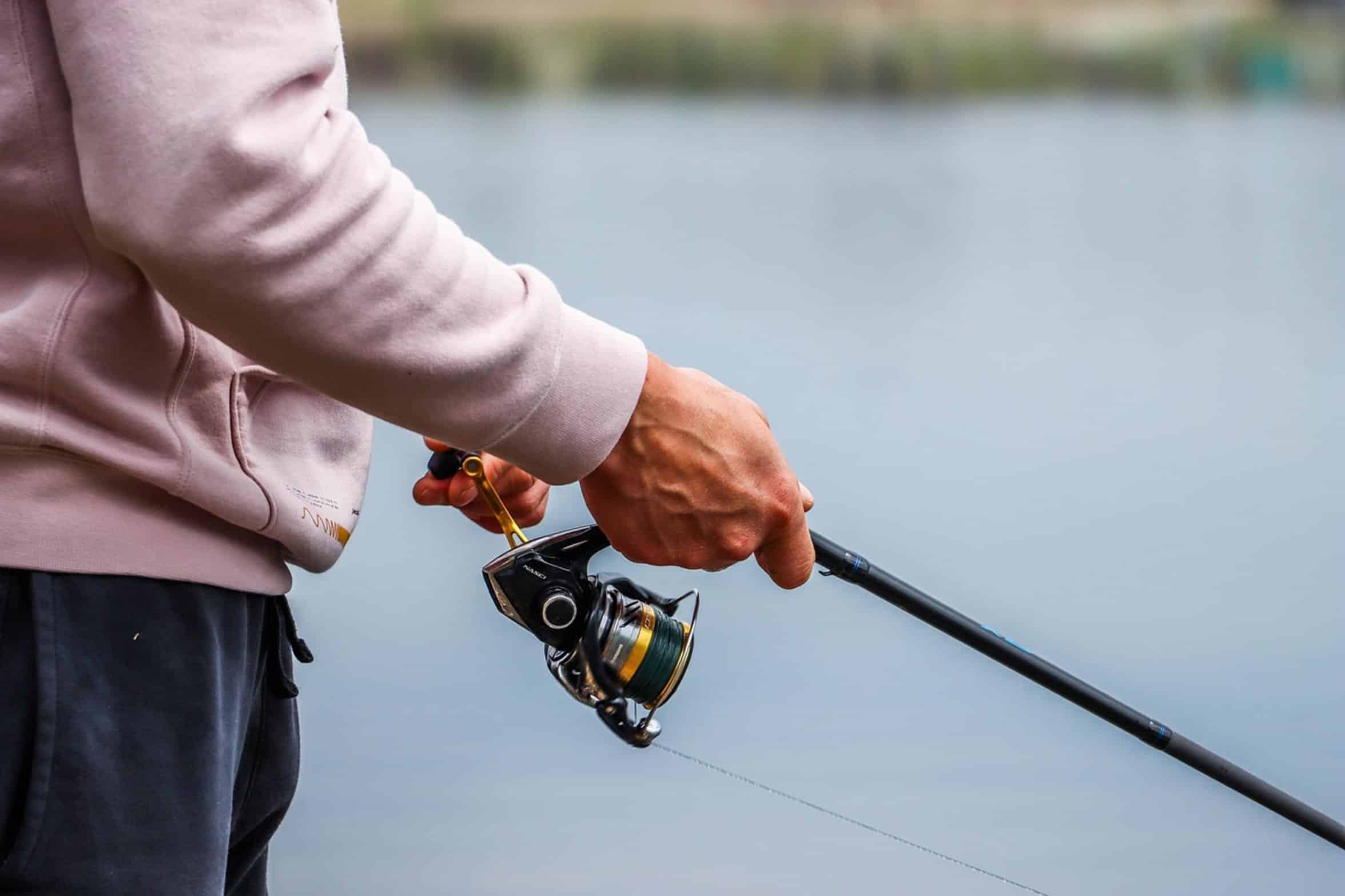
To be sure, you don’t want too heavy of line and you certainly should of not use a big spinning reel. Heavy gear will spook these wary bluegill. A light-action rod with a sensitive tip is perfect.
For line, 4-6 pound test will usually do the job. Adding a fluorocarbon leader adds both invisibility and abrasion resistance. These characteristics gives you the sensitivity to detect subtle bites while minimizing the drag that can occur on lightweight jig heads.
When those small strikes occurs, a light line combined with a sensitive rod will let you know what’s happening immediately so you can quickly set the hook before they spit the bait. Your hook-up ratio should improve greatly and turn potential losers into landed fish. When using a swim jig it’s a different mindset.
Instead of sitting back hoping the fish will come to you, you’re moving forward looking for the fish. This makes for more consistent fishing. This also makes a day of panfish fishing more exciting.
Even though they’re not big like bass and walleye the thrill of the hunt is there. Take the swim jig out on your next outing. You never know what kind of fish you’ll catch.
There’s more than just walleye and bass in the water. Bluegill are there waiting for that right presentation. A simple retrieve with a small jig can open the door to lots of fish.
Time to give the panfish bite some respect.